Important information about diesel engine trucks| AKMI Corporation

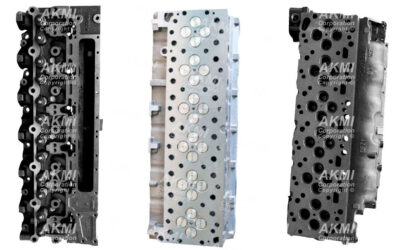
How to Choose the Right Aftermarket Diesel Cylinder Heads for Heavy-Duty Engines

AKMI-cylinder-heads

When it comes to heavy-duty diesel engines, few components influence performance, reliability, and long-term operating costs as much as cylinder heads.

Whether you’re managing a fleet, running a repair shop, or sourcing commercial truck engine parts, selecting the right aftermarket diesel cylinder head is critical to maximizing uptime and preventing costly failures.

The modern aftermarket has evolved significantly. Today’s aftermarket diesel cylinder heads are not just cost-saving alternatives—they are engineered for enhanced durability, optimized airflow, and superior thermal performance.

For demanding applications, investing in a high-quality performance diesel cylinder head can extend engine life and improve operational efficiency.

What Do Cylinder Heads Do in Heavy-Duty Diesel Engines?

Cylinder heads are essential diesel engine components that seal the combustion chamber and regulate airflow in and out of the engine.

They directly impact:

  • Combustion efficiency
  • Compression pressure
  • Engine temperature control
  • Power output and torque

Aftermarket vs OEM Cylinder Heads: Key Differences

OEM Cylinder Heads

  • Built to original factory specifications
  • Typically higher cost
  • May have limited availability depending on engine model

Aftermarket Diesel Cylinder Heads

  • Manufactured with upgraded materials and improved designs
  • More cost-effective for fleets and rebuilds
  • Widely available across multiple engine platforms
  • Often engineered for increased durability and performance

What to Look for in a Performance Diesel Cylinder Head

  1. High-Strength Castings – Reinforced alloys designed for high pressure and heat
  2. Precision CNC Machining – Ensures sealing accuracy and airflow optimization
  3. Reinforced Valve Seats – Prevents wear and cracking under stress
  4. Pressure Testing – Eliminates defects and ensures durability
  5. Optimized Cooling Flow – Reduces overheating and extends engine life

Why Choosing the Right Cylinder Head Matters

Selecting the correct aftermarket diesel cylinder head directly impacts engine longevity, maintenance costs, downtime, and overall fleet reliability.

Conclusion

Choosing the right aftermarket diesel cylinder heads improves reliability, reduces downtime, and lowers the total cost of ownership.

The Rising Demand for Heavy-Duty Diesel Engine Parts: Why Aftermarket Alternatives Matter

diesel engine parts

In the diesel industry, keeping equipment running isn’t optional; it’s essential.

Fleets, owner-operators, and rebuild shops rely on durable parts to keep engines pushing through long hauls, heavy loads, and demanding job sites.

As new equipment becomes more expensive and lead times get longer, more buyers are turning to aftermarket diesel engine parts.

Not only are these parts reliable, but they’re often more cost-effective than OEM components without sacrificing quality.

At AKMI Corp, we’ve seen a noticeable spike in interest around replacement parts like Cummins ISX oil pans, Caterpillar flywheels, and Detroit Series 60 camshafts, especially as maintenance season approaches.

Why Aftermarket Parts Are Becoming the Smarter Choice

Most operators know the frustration of downtime. Waiting on OEM suppliers or paying premium prices eats into schedules and profit margins. That’s where quality aftermarket parts bridge the gap.

Take the Aftermarket ISX oil pan for example. It’s not just an alternative; it’s a way to get the truck back on the road faster without overspending.

Fleet managers who once insisted on OEM are now discovering that aftermarket manufacturers can match fitment and performance when produced to OEM-equivalent standards.

We’ve also seen increased inquiries for Cummins ISX camshaft 4298629 and L10, M11, ISM 4952780 oil pans, indicating that mechanics aren’t just searching for parts; they’re comparing options.

When reliable aftermarket replacements exist, they can solve problems quickly, especially during peak repair seasons.

A Quick Look at What’s Trending in Diesel Engine Search

Components like CAT 3306-cylinder heads and Volvo flywheel housings show consistent search traction.

This shift isn’t random; it reflects how the market is evolving. More shops are proactively sourcing inventory, more buyers are comparing cost-saving options, and more diesel owners are realizing they don’t have to wait months for OEM stock..

What This Means for Fleets, Shops, and Operators

The rise in search volume around aftermarket terms like Cummins ISX oil pans, Detroit Series 60 oil pans, and Paccar MX13 oil pans shows that the industry is moving toward accessibility and affordability without compromising reliability.

Those who stay ahead: shops that stock replacement parts and fleets that keep spares ready — reduce downtime dramatically.

And with engines like the Cummins ISX/X15, Detroit DD15, Volvo D13 continuing to dominate the road, availability matters more than ever.

Whether you’re rebuilding, refreshing components, or preparing for preventative maintenance, the aftermarket isn’t just the backup plan anymore. It’s THE plan.

Take Advantage of the Market Shift

If you’re sourcing parts like:
✔ Aftermarket ISX Oil Pan
✔ Cummins ISX Oil Pan replacement
✔ 4952540 / 4952780 Oil Pan
✔ CAT or Cummins Flywheels
✔ Detroit Series 60 Camshaft or Oil Pan

You’re already aligned with where the industry is headed. These are exactly the types of components customers are searching for in high volume, and we’re here to supply them.

Ready to keep your engines running longer?

Visit www.akmicorp.com to request a quote, check inventory, or talk with our team.
A part replaced today is a breakdown prevented tomorrow.


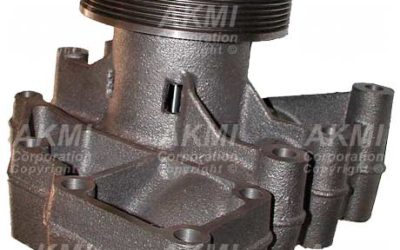
When and How Water Pumps Were Started

history of water pumps

Hello everyone! I’m new to AKMI and to the diesel engine aftermarket parts industry. As part of my learning journey, I’ve been exploring the different parts we offer and teaching myself about how they work.

The first component I decided to dive into was the water pump. While researching, I quickly learned how important it is to be specific when searching online; otherwise, you might find yourself overwhelmed with information that isn’t quite what you’re looking for!

That’s exactly what happened when I searched for the history of water pumps. I hadn’t realized just how many types of water pumps exist, or how varied their designs and uses are.

Instead of focusing on the many pumps used in diesel engines today, I thought it would be interesting to share what I discovered about the early history of water pumps in general.

A Brief History of Water Pumps

The earliest known water pump was likely the ancient Egyptian shadoof, a simple rope-and-bucket device used to lift water from wells around 2000 BC.

By around 250–200 BC, inventors in Greece, such as Archimedes and Ctesibius, developed the first pumps with moving parts, the Archimedes screw and the reciprocating pump, respectively. These designs marked the beginning of mechanical water pumping as we know it.

During the Renaissance, inventors began describing early versions of the centrifugal pump, which evolved into its modern form in the late 17th century thanks to Denis Papin.

Papin, born in 1647 and passing in 1713, was a French physicist, mathematician, and inventor best known for inventing the steam digester (a precursor to the pressure cooker) and for contributing to early designs of the steam engine and the centrifugal pump.

By the 19th century, engineering advancements led to the development of the first all-metal pumps and the direct-acting steam pump, laying the foundation for the centrifugal pumps that are still widely used across industries today.

Why Water Pumps Matter

Searching for the right water pump can be a detailed process. Water pumps are essential in residential, industrial, and automotive applications.

Just imagine if an industrial water treatment plant’s pumps failed. Without circulation, untreated sewage could be discharged into local rivers and streams, leading to severe environmental contamination.

A failed water pump system can also cause water shortages that affect homes, businesses, and even critical services like firefighting.

Thankfully, modern water treatment facilities are designed with redundancy, meaning they have multiple pumps to ensure continuous operation, even if one fails.

Closing Thoughts

It’s fascinating to see how something as seemingly simple as a water pump has evolved over thousands of years, from buckets and ropes to high-efficiency, precision-engineered machines.

Learning about their history not only deepens my understanding of modern engine components but also reminds me how innovation builds on centuries of human ingenuity.

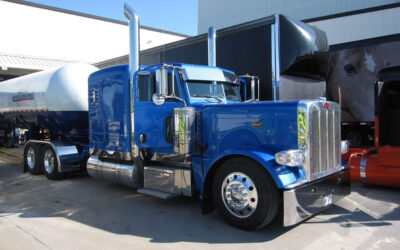
The history of Peterbilt trucks

Blue peterbilt heavy duty truck

We are going to talk about the history of Peterbilt trucks. It all started as a necessity, then an idea and then an action that became one of the largest truck manufacturers in the world. If you want to know how this happened, keep reading.

Who was T.A. Peterman?

Theodore Alfred Peterman was a plywood manufacturer and lumberman in Tacoma, Washington. At the time he was looking for a better way to move his felled logs to the lumber mills more efficiently and productively.

He started by purchasing surplus military trucks and modifying them for his needs. Then in 1939, he completed the purchase of the Oakland division of Fageol Truck and Motor Company from Sterling Motor Company, who purchased the majority of the assets from Waukesha Motor Co. and the Central Bank of Oakland.

Peterman built two ‘chain-driven’ trucks for logging purposes, but they did not work for this purpose. These trucks and engines did work very well for normal hauling and freight transportation. The company continued building trucks that were built and sold very well. The company later became known as Peterbilt.

How did Peterbilt get its name

After acquiring Fageol Truck & Motor Company, Peterman set out to build new trucks for the logging industry and wanted a new name for the truck manufacturing company.

According to information out there, the name of ‘Peterbilt’ derived from a line of wood doors that was produced one of Peterman’s lumber facilities. Plywood was used very liberally on the interior of early “Petes”, which was another link with Peterman’s lumber operations.

Peterbilt manufactured 14 trucks in their first year in business.

What was the first Peterbilt ever made?

The oldest Peterbilt trucks were the Model 260 and Model 334. Both of these were known for their all-steel cab.

Model 334

Peterbilt Truck Model 334

Model 260 fun facts

  • Model 260s were chain-drive single-drive-axle trucks.
  • The base-powered unit gasoline weighed 32,000 pounds.
  • The diesel-powered unit weighed 37,000 pounds.

Model 260

Peterbilt Truck Model 260

Model 334 fun facts

  • Model 334s were dual drive
  • It weighed up to 44,000 pounds.
  • Had provided with egg-crate grille

Here is a brief history of Peterbilt and some of their contributions to heavy-duty truck parts:

In 1939 Peterbilt started selling trucks to the public. Peterman sent his engineers out to speak with the truckers themselves to see what their needs and expectations were for their truck.

He didn’t just think about engine performance, but all aspects of heavy-duty truck parts from the grill to hoods and overall cab design. This attention to the truckers paid off as the overall design of the truck was a hit and set the stage for the distinctive styling that Peterbilt would become known for.

The Goal

Dedication to quality was also very important to Mr. Peterman. As Ford was producing hundreds of trucks a day with its assembly line and manufacturing plant, Peterman set a goal of 100 trucks a year. In 1939, they built a total of 14 trucks (partial year) and in 1940 the company built 82 trucks.

1945 – Peterbilt pioneered the use of aluminum to reduce cab & chassis weight, which increased payload capacity. In 1949, the company unveiled a practical cab-over-engine model in anticipation of highway length limits.

1958 – Peterbilt was purchased by Pacific Car & Foundry who primarily manufactured railroad freight cars. Pacific Car had purchased Kenworth in 1944 and was already a competitor in the heavy-duty truck market and replacement parts. The Pacific Car & Foundry later changed its name to PACCAR in 1972

1959 – Peterbilt introduced the 90-degree tilt hood for easier service, then in 1965 built the 1st all-aluminum tilt hood for conventional models.

1960 – Peterbilt opened a new manufacturing plant in Newark, CA. 800 trucks were produced in the 1st year.

1969 – Peterbilt opens its 2nd manufacturing plant in Nashville, TN. They closed this facility down 40 years later in 2009

1970’s – Peterbilt began manufacturing trucks for refuse.

1980 – Peterbilt opened a then state-of-the-art manufacturing facility in Denton, TX. Most of the manufacturing from the Newark plant was consolidated and moved to Denton. The Newark plant was officially closed in 1986.

1984 – Peterbilt introduced Model 349 which introduced innovations such as the rear engine power take-off and the self-steering lift axle for the construction industry.

1993 – Peterbilt moves their official headquarters and engineering from Newark, CA to Denton, TX

Jumping ahead some.

2011 – Peterbilt introduced Model 386 which is the first Smartway Designated Alternative Fuel Vehicle of the industry.

2011 – Peterbilt introduced Model 587 which set new standards of aerodynamic and operational efficiency. This was also the first in the
Trucking industry to become standard with Air Disc Brakes.

2014 – Peterbilt introduces the EPIQ Package for their Model 579 truck, which already had broken new ground in aerodynamic efficiency and fuel economy.

The EPIQ package Includes Complete Aerodynamic Package, a PACCAR MX-13 Engine, Fuller Advantage Automated Transmission, Single Horizontal Exhaust, SmarTire Tire Pressure Monitoring System, Low Rolling Resistance Tires and Optimizing Spec’ing Software.

Darrin Siver, Peterbilt general manager, and PACCAR vice president has been quoted saying “Peterbilt’s products are among the most technologically advanced and we continue to invest and develop innovations that boost productivity, durability, and Safety.”

As Peterbilt continues to push boundary edges, it will be interesting to see what the next 75 years will bring as technologies continue to advance.


What is a glider kit

There are many valid arguments to consider a glider kit as a viable option if you are looking to replace your truck.

What is a glider kit

The Glider kits are completely new trucks manufactured with remanufactured mechanical components.

The manufacturer can offer cab, chassis, axle, and suspension.

They can install a remanufactured engine, but the engine would have to be the same year or newer.

Besides the donated parts from an older truck, glider kits include:

  • New cab.
  • Dashboard assembly.
  • New front axle assembly.
  • Front wheels.
  • Many other new commercial truck parts.

As company fleet vehicles get older, the cost of constantly repairing older trucks and replacing the commercial truck parts throughout the year can become expensive.

The cost of purchasing a new truck can influence how long a company tries to continue repairing its aging trucks.

Most popular Glider kits are:

The Detroit Diesel 60 Series and the Caterpillar C13/C15, both of which are EPA 98/04 compliant and do not have EGR or SCR.

These engines are reliable, low maintenance and very economical.

The manufacturers guarantee Glider kits when they install remanufacturer components in the plant.

Now, when the builder is the one who finishes the unit, the different suppliers of the drive train will deliver the corresponding guarantee.

Canada is another country that has a growing sales of Glider trucks, especially in the activity of timber and heavy load transport.

Where each transporter prefers its configuration for its unit.

The era of the Glider has arrived and will extend to other continents.

Here are some advantages of purchasing glider kits:

  1. Completed Glider Kits (purchase price, labor (build), parts) must be 75% or less than the cost of a new vehicle. This also referenced as the “Safe Harbor Rule”.
  2. Gliders can be sold without the 12% Federal Excise Tax, as a minimum of 2 major components supplied by the customer and used in the build. The IRS has hinted that changes to this may occur and you should look into Ruling 91-27 on the IRS website
  3. Full factory backing with all new components, 1 year/100,000 mile warranty is standard, with optional extended warranties. Full engine warranties may vary by engine manufacturer.
  4. New Truck “financing rates” often the can use the value of the older components that are ‘donated’ for the build against the down payment of the purchase of a Glider Kit

glider truck

Are Glider trucks considered new?

During my research, I came across an interesting question.

Are the Glider kits considered “new” or “used”?

Manufacturers certify Glider kits as if they were new, given a new model year & VIN, which are deductible and would depreciate like a new asset.

The National Highway Traffic Safety Administration (NHTSA) considers “Used”, a truck completed with both new & used commercial truck parts, including new cab (such as a glider kit) must incorporate a used engine, used drivetrain and used rear axle – and at least two of these components must come from the same “donor” truck.

If the build meets these requirements and maintains a “used truck” identity,

then no requires a certification labeling.

Are you tired of constantly repairing your truck and replacing varying commercial truck parts just to keep your rig running?

Then maybe a “Glider Kit Built Truck” is something worth looking into.

If you want to know more about trucks check our Blog!

Truck Part Needs for your fleet maintenance

Commercial truck parts

Your company fleet vehicles, are they starting to put on miles or years?

Are they driven in rough road conditions, or on smooth highways?

Does your company have a separate garage to do in-house maintenance and replacement of your commercial truck parts?

Or are the vehicles sent to an off-site location trusted for their work?

Do you know what brand/company can be your solution to your commercial truck parts needs?

No matter if your company repairs your trucks in house or sends them out to a trusted licensed repair shop.

it’s worth knowing what you are putting into your vehicles.

There are many different types of commercial vehicles on the road today.

As the definition leads to a wide array of styles, from your regular pick-up vehicle to the big semi’s hauling trailers behind them.

Any company that purchases a vehicle(s) for company use, no matter if it’s a taxi shuttling passengers, or mobile trucks repair carrying tools & parts, these would be considered commercial vehicles.

Just imagine how many different possibilities there are in this country alone.

How can you be sure that a certain company has the right commercial truck parts for your needs?

Well, I am here to help you figure that out.

First

If you are a retailer or repair shop, you want to find a company that is a diesel engine parts wholesaler/distributor.

They are designed to sell their products with no sales tax for their customers.

Sorry to all the customers whose fleet vehicles are regular gas engines, but diesel engine commercial truck parts are the topic today.

Second

Not all diesel parts distributors carry parts for all diesel engines.

Some may specialize in certain commercial parts for “Heavy & Medium Duty” trucks only.

These types of trucks are the big Semi-Tractors you would see on the highway hauling one or more trailers behind it.

Then there are also the box or straight trucks.

These types are more common for city deliveries but have similar engines as the bigger semi-tractors.

Big passenger buses also fit into these categories as well.

Pick-up vehicles with diesel engines do not fall under these categories and may not fall into a distributor’s product range.

Now that we have narrowed down the field, there are still some concerns that need to be addressed to determine the right brand of commercial parts for your truck or fleet needs.

What type of truck do you have?

Some of the more popular trucks on the road are equipped with the following types of engines:

  • Caterpillar.
  • Cummins.
  • Detroit Diesel.
  • International/Navistar.
  • Mack/Volvo to name a few.

Okay, so your vehicle has one of the mentioned types of engines and now your next concern would be the quality of the products themselves.

This is always a valid concern, especially when you are thinking of trying out products from a new source.

Make sure that your research is thorough, and you review more than one source of information about a company.

What’s a VGT?

What a VGT is

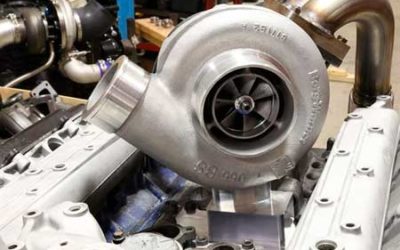
Ever wonder what a VGT is? It stands for Variable Geometry Turbocharger. It might also be called a VNT, which means Variable Nozzle Turbocharger.

There are excellent explanations of VGT designs on the Internet, but our interest here is more upon their maintenance.

First, why are VGTs needed on diesel engines?

The answer is that the former waste-gated designs are too slow for today’s fuel injection systems.

Current common rail fuel injection systems fire as many as five times in one combustion cycle. In order to maintain proper air/fuel ratios, the turbo boost has to be adjusted more rapidly than a pneumatically controlled system can keep up with.

Secondly, the VGT acts as the “traffic cop” which balances air intake pressure with exhaust backpressure required for EGR induction and is constantly “hunting” to maintain the balance.

So what do we need to know about VGTs? Here are some facts about them.

  1. Boost will fluctuate, depending upon vehicle speed, load and desired EGR flow. Boost is almost instantaneously altered with throttle position changes. Even at steady throttle and constant load the boost might vary with EGR demand.
  2. Boost can vary day-to-day. Ambient air pressure and temperature are sensed by the ECM so that boost pressures are always optimized for engine operating requirements.
  3. VGTs will whistle loudly in certain normal engine operating conditions. This condition occurs when the ECM requests more exhaust heat for regeneration of the diesel particulate filter. The whistle might sound like a boost leak but is actually a normal condition.
  4. VGT sizing must be matched to the engine to prevent over-boost conditions.
  5. The replacement of a VGT requires reprogramming of the actuator.

In order to protect a VGT from seizing, it is essential that we maintain engine oil cleanliness.

The VGT turns at speeds exceeding 100,000 rpm, so bearing failure is catastrophic. The engine oil both lubricates and cools the bearings.

We want to avoid conditions like these:

zeised turbocharger

We can avoid VGT failure by employing protection procedures.

  • First, we match oil changes to engine hours and drive cycles, NOT to mileage.
  • Second, we watch for oil pan sludge accumulation and check oil condition when we change oil. Gritty oil will lead to turbo failure.
  • Third, we watch for the engine “making oil”. That is, excessive DPF regeneration attempts due to contaminated turbo output pressure sensors or to improper DPG regeneration functions can dilute the oil with fuel.

We need to record OIL LEVELS upon oil changes to protect against dilution.

If we detect sludge build-up, we need to either clean or replace the oil pan and fix the root causes of sludge creation or fuel intrusion.

Taking the proper precautions to prevent VGT failures can save repair bills of thousands of dollars for replacement and calibration of a VGT.

Exhaust Gases & Emission Reduction

Blue truck expelling exhaust gases

What are exhaust gases?

Usually made from cast iron or stainless steel, an exhaust manifold collects engine exhaust fumes from multiple cylinders,

(fumes made during the combustion process) and delivers them to the exhaust pipe.

The exhaust pipe in turn, funnels the exhaust gases to a catalytic converter and the muffler.

When an engine starts its exhaust stroke,

the engine piston moves up in the bore of the cylinder, which decreases the total chamber volume.

The exhaust valve opens and the high-pressure gas escapes into the exhaust manifold or header, creating an ‘exhaust pulse’.

Exhaust manifolds can be an important source of backpressure.

Because exhaust gases from one cylinder can build up pressure in the manifold and that affects the next cylinder that uses the manifold.

Exhaust Gases can be harmful to inhale

Making it very important to have a fully functional exhaust manifold for your trucks or fleet vehicles.

Detecting an exhaust leak can be very difficult,

people may inhale exhaust gases without being aware of it.

Exhaust manifolds come in all different types, shapes, and sizes depending on the engine type and model.

Some can have 4 portholes if it’s a 4 cylinder engine, or 6 portholes if it’s a 6 cylinder engine.

No matter size or material of the exhaust manifold, they all perform the same basic function.

Over the last few decades, air emission standards have forced automobiles to improve the exhaust process.

So vehicles are not sending too many harmful pollutants into the air.

These same standards are beginning to catch up with the diesel engines heavy/long haul trucking industry.

As technology improves, so has engine parts. One such improvement was the advent of the EGR system.

What does exhaust gas contain?

Compared to the composition of air,

the diesel exhaust gas contains increased concentrations of water vapor (H2O) and carbon dioxide (CO2)—the main combustion products.

The concentrations of both H2O and CO2 can vary from a few percent, up to about 12% in diesel exhaust.

These combustion products displace oxygen, the concentration of which can vary from a few percent, up to about 17% (compared to 21% in ambient air).

The main component of diesel exhaust, just as is the case with ambient air, is nitrogen (N2).

By comparison, the concentrations of diesel exhaust pollutants are very small.

For the purpose of calculating the physical properties of diesel exhaust gas, they can be neglected.

Resource: Diesel Exhaust Gas

What is exhaust gas recirculation?

Exhaust Gas Recirculation is a process that is supposed to reduce the nitrogen oxide emissions that are released into the air, by engines in general.

This is done by recirculating some of the engines exhaust gases back into the engine itself.

With diesel engines, the exhaust gas replaces some of the excess oxygen in the pre-combustion mixture,

and can lead to lower temperatures in the lower combustion chamber, which can result in a loss of engine efficiency.

With the introduction of EGR, many engine parts have been redesigned to accommodate this new system.

Different Parts have been redesigned specifically for EGR systems such as:

  • Exhaust Manifolds.
  • Oil Coolers.
  • Water pumps.

Exhaust gas recirculation valve

The first EGR systems were crude and simple in design.

Some cases, an orifice jet between the exhaust & intake tracts, circulating air from exhaust to the intake, while the engine was running.

This design resulted in rough idling & reduced performance.

The exhaust gas recirculation valve controlled by a manifold vacuum was added to control the flow from exhaust to intake, under certain conditions.

In modern diesel engines, EGR gas is cooled with a heat exchanger to allow the introduction of a greater mass of recirculated gas.

Exhaust Gas Recirculation is now a requirement in most modern engines, due to emission regulation standards.


Diesel Engines: Pros & Cons

Green diesel engine heavy duty truck
Diesel engines are becoming more popular, and are being used more & more in automobiles as well as heavy haul trucks. As diesel engines are now being used more often, there are more places where you can fill your diesel engine spare parts needs.

Do you know the difference between a Diesel Engine and a Gas Engine?

All diesel mechanics would be able to tell you the difference, but for those who aren’t, I have some information for you.

Both diesel engines & gas engines are considered “Internal combustion engines”, so they are similar in this regard. It’s how the combustion happens that makes them different.

Diesel Engine: (aka – compression-ignition engine)

Uses heat of compression to initiate the ignition & burning of fuel that has been injected into the combustion chamber.

Spark-Ignition Engine:

Can be referred to as either petrol or gasoline engine. Instead of using compression to initiate an ignition, spark plugs are used to ignite an air-fuel mixture.

Even though the use of diesel engines is on the rise, finding reliable diesel engine spare parts can be tricky. Not all parts shops carry diesel engine spare parts, and the ones that do usually carry just the more popular brands or parts found in their local area. The best thing to do is find a parts shop that specializes in diesel parts if possible.

Do you know some of the pros/cons of diesel engines vs gas engines?

PRO: Diesel engines get great mileage and can deliver anywhere from 20%-30% better fuel economy.
This all depends on the setup of the engine and if it’s an automobile or long haul truck.
CON: As the use of diesel engines increases, the price of diesel fuel will continue to increase. Diesel fuel is used not just for engines, but home & industrial generators & heating oil.

PRO: Diesel fuel is one of the most efficient & energy dense fuels available because it contains more usable energy then gasoline.
CON: The extra energy doesn’t result in extra high-speed performance. Diesel engines are more considered work horses, while gasoline engines are considered racehorses. As technology advances, so does the efficiency and output of diesel engine spare parts. Some automobiles with diesel engines can compare to certain high powered gasoline equivalents.

PRO: Diesel shave no spark plugs or distributors, so they do not require ignition tune-ups.
CON: Regular maintenance is still required to keep diesel engines running. There are multiple filters that regularly need to be changed.

Due to how diesel fuel burns, diesel engines provide more torque to the driveshaft than gasoline engines.This allows diesel powered trucks, SUVs and cars to “out tow” gas-powered vehicles while still providing that improved fuel economy.

It’s no wonder that the majority of heavy haul trucks use diesel engines instead of gasoline-powered engines.

The use of diesel engines are not limited to automobiles, trucks or generators. Many of today’s construction machines, buses and farm/agricultural machines utilize diesel engines.

As the use of diesel engines increases and technology improves, the need for diesel engine spare parts will increase and improve with them.

Cooling System Maintenance

cooling system maintance

When it comes to vehicle maintenance, many people may tend to overlook the cooling system.

After all, if the vehicle is not showing signs of overheating or you do not notice any leakage on the ground under the engine,

most would assume there is nothing to worry about.

Performing maintenance on the cooling system is more important than you think.

And is more than just adding new coolant and replacing a water pump when needed.

The maintenance process is relatively simple and consists of performing tasks that even people with no mechanical experience can do.

Here are steps for performing Cooling System Maintenance on your vehicle:

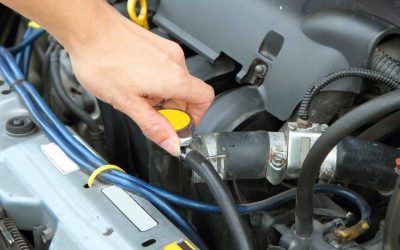
  1. Check coolant/antifreeze levels periodically and add coolant/antifreeze when needed.
  2. Look for any signs of leaking under the car, from the water pump, the hoses or the radiator.
  3. Check all the hoses connected to water pump and radiator.
  4. Pressure Test the radiator cap to ensure it is holding the proper pressure and not leaking.
  5. Check the thermostat – once the coolant reaches a certain temperature, the thermostat opens up allowing coolant to flow, regulating the coolant temperature. If the thermostat is stuck and will not open, it causes poor circulation and can lead to the engine overheating.
  6. Confirm the engine cooling fan is operating correctly.
  7. When replacing the water pump, flush the entire cooling system. Draining and replacing coolant is not enough. Flushing the cooling system removes any build-up of sediment or rust, which could prematurely damage the new water pump.

The most important thing is to remember to perform these tasks on a semi-regular basis,

which will help lead to longer engine life.

If you feel that you cannot do these tasks yourself or suspect that something may be wrong,

then take your vehicle to a trusted mechanic for further inspection.

Your vehicles cooling system is vital to engine performance and longevity.

If there is something wrong, the engine can overheat causing major damage like a cracked cylinder head or warped cylinders

– both of which are expensive repairs.

Make sure that you regularly check your cooling system to ensure long life for the engine in your vehicle.